Does Mold Cause Sneezing?
Why mold may trigger allergy-like sneezing and how to distinguish it from a cold or seasonal allergies.
Sneezing in a particular space can be a useful clue, but it is not a diagnosis by itself. These common questions explain what patterns can be worth investigating.
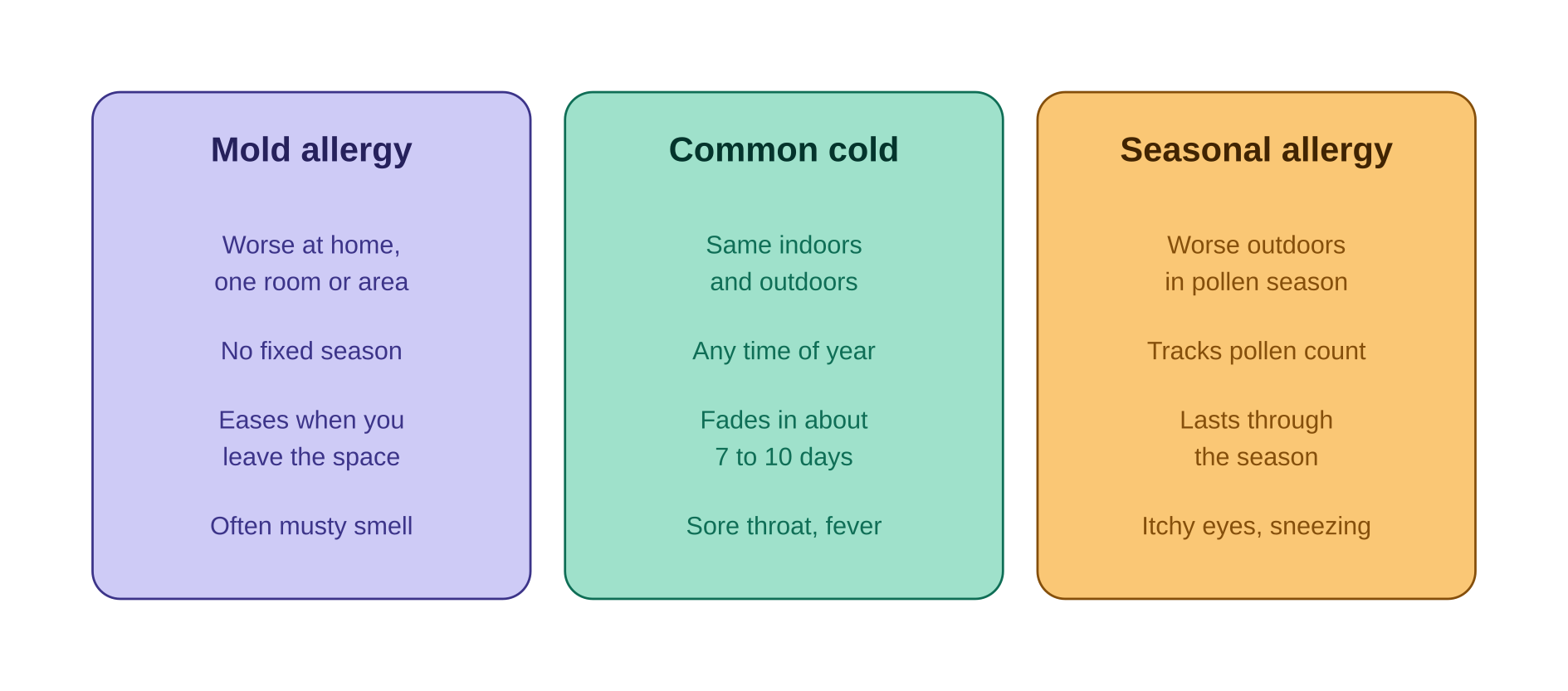
Frequently asked questions
Why do I sneeze every time I go into my basement?
Basements are common mold hotspots due to higher humidity and less airflow. Sneezing that consistently happens in one specific room, and stops elsewhere, is a strong sign of a localized mold or allergen source in that space.
Can mold allergies be seasonal?
Outdoor mold spore counts do rise in warm, humid months, so some people notice worse symptoms seasonally. Indoor mold from a moisture problem, however, does not follow a season and persists until the source is fixed.
How do you tell the difference between mold allergies and a cold?
A cold usually comes with a sore throat and resolves within 7 to 10 days regardless of location. Mold allergy symptoms tend to persist as long as you are in the affected space and ease once you leave it, without a sore throat or fever.
Do air purifiers help with mold-related sneezing?
A HEPA air purifier can reduce airborne mold spore concentration and may ease symptoms, but it does not address the underlying mold source. Fixing the moisture problem is necessary for a lasting solution.
Can antihistamines help with mold allergy symptoms?
Over-the-counter antihistamines can help manage sneezing, itchy eyes, and congestion caused by mold allergies. They treat symptoms, not the mold source, so they work best alongside identifying and removing the mold.
SOURCES
This article is for general information only and is not medical advice. Consult a qualified healthcare professional about symptoms or treatment.