How to Know If Mold Is Affecting Your Health
Signs to watch for, when to investigate your space, and when to speak with a doctor.
Mold exposure can affect people differently. This guide answers common questions about possible symptoms and when it makes sense to investigate a suspected moisture or mold problem.
Frequently asked questions
Can mold exposure symptoms go away on their own?
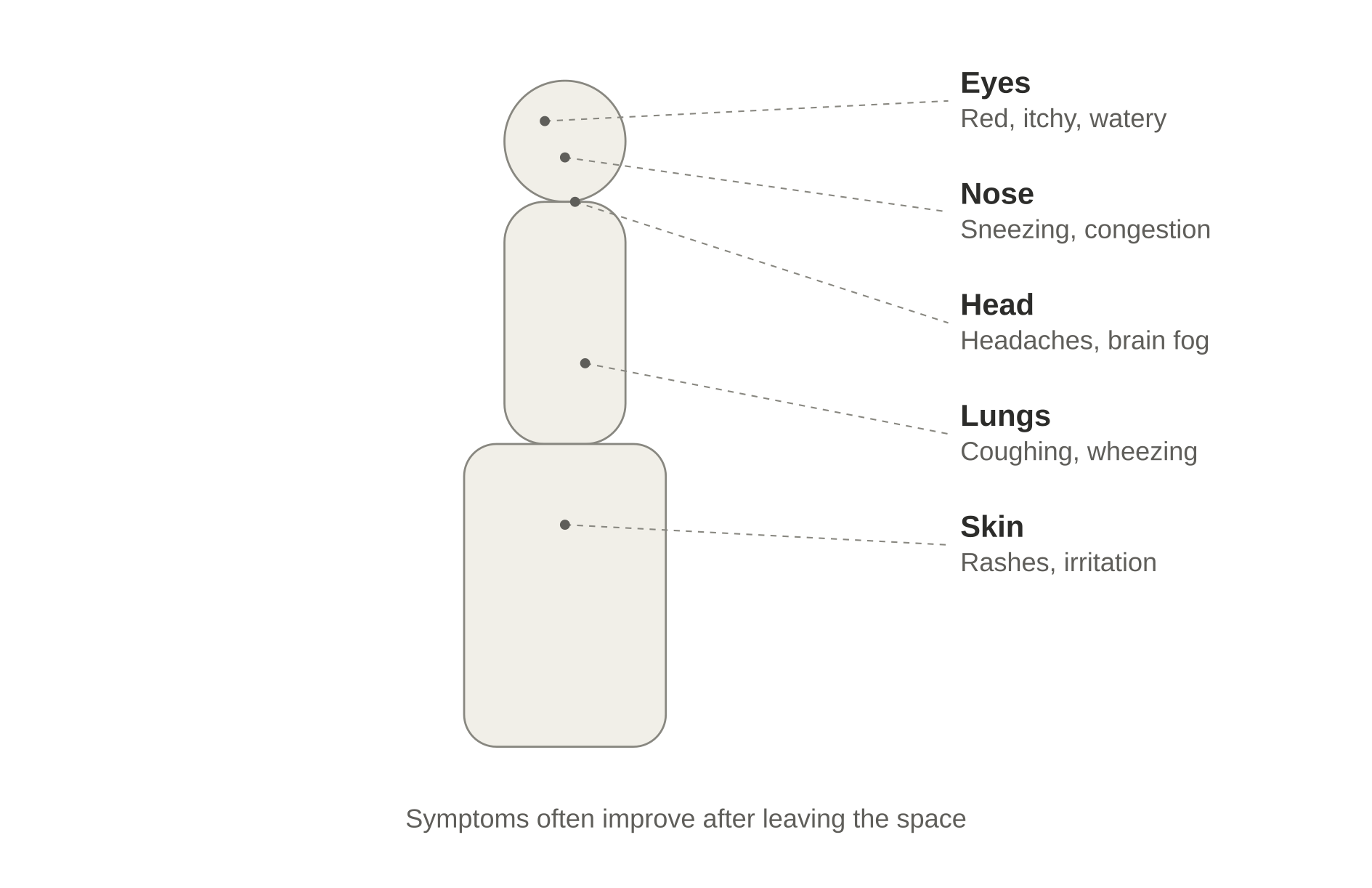
Mild symptoms can ease once you're away from the affected space, but if the mold source isn't addressed, symptoms typically return whenever you're back in that environment. Persistent or worsening symptoms warrant a professional inspection and a conversation with a doctor.
How long does it take for mold symptoms to appear?
This varies widely by person and sensitivity. Some people notice symptoms within hours of exposure, while others develop symptoms only after prolonged exposure over weeks or months.
What does mold toxicity feel like?
Reported symptoms include fatigue, headaches, difficulty concentrating, respiratory irritation, and skin or eye irritation. Symptoms overlap with many other conditions, so a medical evaluation is the only way to confirm the cause.
Can mold in the house cause fatigue?
Some people report fatigue alongside respiratory or skin symptoms when exposed to mold, particularly if the exposure is ongoing. Fatigue alone isn't a reliable standalone indicator, so it's best considered alongside other symptoms and a home inspection.
Is there a blood test for mold exposure?
Allergy testing (skin prick or blood IgE tests) can confirm a mold allergy, but there is no standard blood test that definitively diagnoses mold-related illness. A doctor can help determine which tests, if any, are appropriate for your symptoms.
SOURCES
This article is for general information only and is not medical advice. Consult a qualified healthcare professional about symptoms or health concerns.